

Can you go to jail for not paying attorney fees? Learn the legal consequences in our ultimate guide.
Can You Go to Jail for Not Paying Attorney Fees?
Imagine facing a courtroom where unpaid legal bills could land you behind bars. While this scenario sounds extreme, courts do hold significant power to enforce payment obligations. In family law disputes, such as divorce, failing to settle attorney fees may trigger severe repercussions—including potential jail time.
Legal professionals often emphasize that clients must prioritize settling these costs. Judges frequently issue orders requiring one party to cover the other’s legal expenses, especially when financial imbalances exist. Non-compliance can lead to contempt charges, asset seizures, or even incarceration in extreme cases.
For example, an Illinois court revoked a defendant’s probation and imposed a four-month prison sentence after he ignored a $245,000 restitution order. However, the 11th Circuit Court later ruled that courts must first assess a person’s ability to pay before enforcing such penalties. This balance between accountability and fairness remains critical in these rulings.
Understanding terms like court order, judgment, and civil contempt helps clarify how non-payment escalates legally. This guide breaks down the risks, processes, and defenses related to unpaid fees—equipping readers with actionable insights for navigating this high-stakes landscape.
Key Takeaways
- Courts may enforce payment through contempt charges or asset seizures
- Judges often order one party to cover legal fees in family law cases
- Incarceration is rare but possible for deliberate non-compliance
- Defendants must receive a chance to explain financial hardships
- Due process requires courts to assess ability to pay before penalties
Understanding Attorney Fees in Divorce and Family Law
Navigating financial responsibilities during divorce often raises critical questions about legal expenses. Attorney fees represent the costs of professional representation, but their role extends beyond basic billing. Courts use these payments to maintain fairness when one spouse holds significantly greater financial power.
A tax attorney in Springfield MO can help resolve complex IRS issues efficiently. They offer expert guidance on audits. Clients gain peace of mind with personalized tax strategies.
Definition and Purpose of Attorney Fees
Under Illinois law (750 ILCS 5/501), attorney fees ensure both parties can actively participate in litigation. Judges may order one spouse to cover the other’s legal costs if a financial imbalance exists. This prevents situations where wealthier individuals gain unfair advantages in custody or asset disputes.
Statutes like 750 ILCS 5/508(a) grant courts broad discretion. They assess each party’s income, assets, and litigation conduct. A 2020 appellate case (In re Marriage of Pillot) demonstrated how judges reduce fees for unnecessary motions filed by either side.
How Fees Are Determined in Court Orders
Payment obligations appear in formal court orders detailing amounts and deadlines. Illinois courts often issue interim fee awards during lengthy cases to prevent financial strain. Factors influencing decisions include:
- Disparity in earning capacity between spouses
- Complexity of legal issues involved
- Reasonableness of hourly rates charged
For example, a 2022 ruling (In re Marriage of Harnack) required a spouse to pay $28,000 in fees after multiple discovery violations. Such orders emphasize that fees aren’t punitive but ensure equitable access to justice.
Statutory Framework and Court Orders in Fee Disputes
Understanding the legal backbone of fee disputes clarifies court enforcement mechanisms. Illinois statutes establish clear guidelines for resolving conflicts over legal costs, ensuring fairness while maintaining judicial authority.

Key Legal Statutes and Provisions
Illinois law outlines specific rules for handling attorney payments in family cases. Under 750 ILCS 5/501, courts prioritize equitable access to legal representation. This statute mandates fee awards when financial disparities threaten a party’s ability to defend their rights.
Three critical provisions shape these rulings:
| Statute | Key Requirement | Enforcement Tool |
|---|---|---|
| 750 ILCS 5/501 | Balances financial resources between spouses | Interim fee orders |
| 750 ILCS 5/508(a) | Authorizes sanctions for litigation misconduct | Contempt charges |
| 42 U.S.C. § 1988 | Governs fee awards in civil rights cases | Costs judgments |
The Role of Judges in Assessing Reasonable Fees
Trial courts evaluate multiple factors when determining payment obligations. As demonstrated in In re Marriage of Harnack, judges analyze hourly rates, case complexity, and each party’s conduct during proceedings.
Financial disclosures play a critical role. Courts compare incomes, assets, and spending habits before issuing orders. A 2022 Illinois ruling required a spouse to liquidate investments to cover $17,300 in unpaid fees, emphasizing the binding nature of these decisions.
Upcoming sections explore how courts enforce these judgments through asset seizures or contempt measures. Proactive compliance remains the safest strategy in high-stakes family law matters.
can you go to jail for not paying attorney fees
Civil contempt proceedings become the judicial hammer when court-ordered payments remain ignored. Judges view defiance of fee orders as undermining their authority, not merely a financial dispute. Illinois courts emphasize this distinction through rulings like In re Marriage of Harnack, where deliberate non-payment triggered sanctions.
When Non-Compliance Crosses Legal Lines
Courts follow a strict process before imposing penalties. First, they issue a payment order with clear deadlines. If ignored, the owed party may file a contempt motion. Judges then hold hearings to determine if non-payment resulted from inability or refusal.
Illinois law (750 ILCS 5/508(a)) requires proof of willful disobedience. For example, a spouse who hides assets while claiming poverty risks jail time. The Harnack case saw a 30-day sentence after repeated failures to settle $28,000 in legal costs.
Key factors courts examine:
- Existence of a valid payment order
- Evidence of financial capacity to comply
- Pattern of disregard for judicial directives
Lawyers themselves may face sanctions if they assist clients in evading obligations. A 2021 Illinois ruling fined an attorney $5,000 for filing frivolous appeals to delay fee payments. Such actions reinforce that courts prioritize enforcing orders over punishing debt.
Enforcement Mechanisms and Consequences for Non-Payment
When court-ordered financial obligations remain unmet, states deploy systematic tools to secure compliance. These measures ensure judgments retain teeth while respecting due process rights.

Court Order Enforcement and Collection Processes
A finalized judgment transforms unpaid legal bills into enforceable debt. Courts commonly authorize:
- Wage garnishments (up to 25% of disposable earnings)
- Bank account levies
- Property liens on real estate or vehicles
Texas courts exemplify this approach through writ of garnishment procedures. In 2021, a Houston judge froze $42,000 from a defendant’s brokerage account to satisfy overdue family law fees. Illinois allows seizure of tax refunds and lottery winnings under 735 ILCS 5/12-808.
Impact of Interest and Additional Penalties
Unpaid balances accrue interest at 9% annually in many jurisdictions. A $10,000 debt grows by $2.70 daily, adding $985 yearly. Texas adds post-judgment interest compounded monthly, creating snowball effects.
Persistent defaults trigger supplementary penalties:
- $500 fines per violation under Texas Family Code §158.204
- Contempt charges requiring payment of opposing counsel’s enforcement costs
- Suspension of professional licenses
A 2023 Austin case saw a restaurant owner’s liquor license revoked over $18,000 in delinquent legal fees. Proactive negotiation with creditors often prevents these escalations.
Strategies to Avoid Legal Trouble and Payment Defaults
Proactive financial planning minimizes risks in legal fee disputes. Courts favor parties who demonstrate good-faith efforts to meet obligations. Early negotiation with legal teams often prevents escalations to contempt hearings.

Consent Judgments and Security Arrangements
Entering a consent judgment creates binding terms for settling legal costs. This agreement allows clients to collateralize assets like property or investments. A 2021 Illinois case saw a spouse avoid sanctions by pledging a vacation home as security for $31,000 in fees.
Three proven strategies reduce default risks:
- Establish escrow accounts for scheduled payments
- Request modified orders when income changes occur
- Document all communications regarding payment plans
Security arrangements protect both parties. Attorneys may accept liens on real estate or future settlements. These measures show courts the client’s commitment to resolving debts responsibly.
Clear payment schedules prevent misunderstandings. A Texas lawyer reduced client defaults by 68% using calendar-based reminders. Always file formal modifications through the court if adjusting terms—unilateral changes risk contempt charges.
For complex situations, negotiating payment arrangements with creditors often yields better results than silence. Timely communication demonstrates accountability, potentially avoiding wage garnishment or asset seizures.
Comparative Perspectives: State-by-State Approaches
State laws create striking contrasts in how courts handle unpaid legal bills. Enforcement methods range from aggressive contempt measures to financial penalties, shaped by local statutes and judicial philosophies.
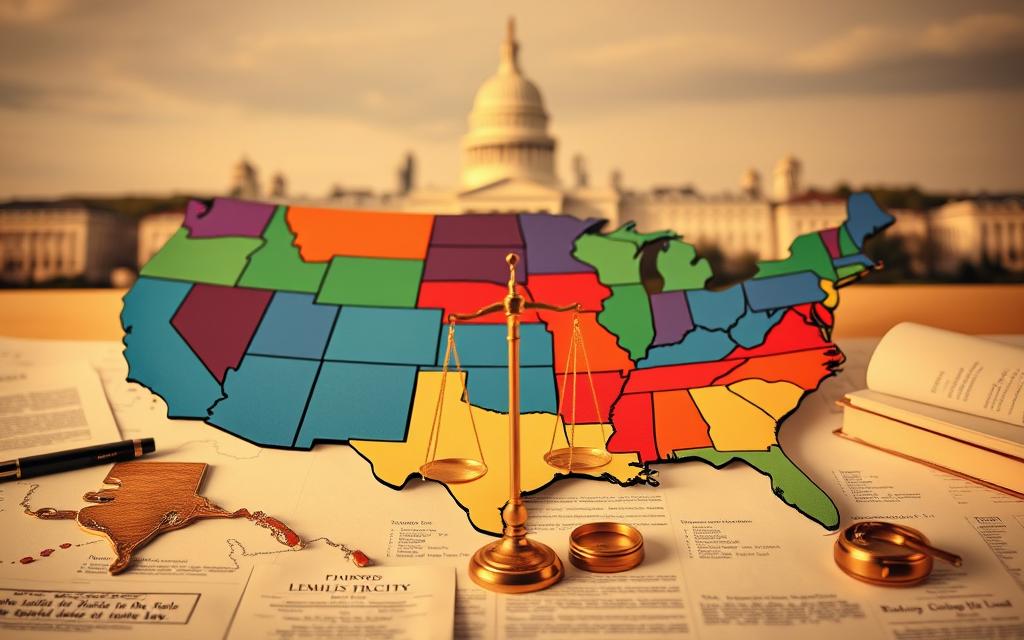
Insights from Illinois, Arizona, and Colorado Cases
Illinois courts frequently use incarceration for contempt in family law disputes. The 2022 In re Marriage of Harnack case resulted in a 30-day jail sentence after repeated failures to pay $28,000 in fees. Arizona takes a different approach – a 2022 Phoenix ruling froze a defendant’s rental properties through liens instead of imprisonment.
Colorado explicitly prohibits jail time for fee non-payment under CRS 14-10-119. In Smith v. Martinez (2021), a judge ordered community service when the debtor proved limited income. These differences highlight how geographic location impacts enforcement severity.
The Role of Legal Experience in Enforcement Decisions
Judges with extensive family law backgrounds often scrutinize payment capacity more thoroughly. Arizona’s Judge Linda Ruiz dismissed contempt charges in 2023 after verifying a spouse’s medical bankruptcy. Conversely, newer judges might default to standard penalties without probing financial disclosures.
Differentiating Between Civil and Criminal Contempt
Two distinct contempt categories influence outcomes:
- Civil contempt: Forces compliance through fines or jail until payment (common in Illinois)
- Criminal contempt: Punishes past disobedience with fixed sentences (rarely used in fee cases)
Colorado’s Supreme Court ruled in 2020 that civil contempt requires proof of present payment ability. This precedent prevents incarceration when debts result from genuine hardship. Experienced attorneys leverage these nuances to protect clients across state lines.
Conclusion
The legal system treats unpaid attorney fees as serious breaches of court authority. Judges employ wage garnishments, asset liens, and in extreme cases, incarceration to enforce payment orders. Illinois courts demonstrate this through rulings imposing jail time for deliberate non-compliance, while Arizona prioritizes property seizures.
State approaches vary significantly. Colorado mandates alternative penalties like community service when debtors prove financial hardship. Proactive measures—revising payment plans or submitting income documentation—often prevent contempt charges. Courts increasingly require proof of willful avoidance before imposing sanctions.
Effective strategies include negotiating structured settlements and maintaining transparent communication with legal teams. Recent cases highlight how presenting bank statements or tax records helps avoid penalties. Always consult experienced family law counsel when facing payment challenges during divorce proceedings.
Understanding local enforcement mechanisms remains critical. Seek qualified attorneys to navigate jurisdictional differences and protect your rights under complex judgment systems. Immediate action prevents minor disputes from escalating into life-altering consequences.