

Did you know nearly 70% of first Social Security Disability Insurance (SSDI) applications get turned down? Knowing how to appeal can make a big difference. It can help you get the financial help you need.
Going through the SSDI Reconsideration Guide might feel hard. But, with the right info, you can fight your denial. Many people win their appeals every year. This shows that getting denied first doesn’t mean you’ll lose forever.
This guide will show you how to appeal your Social Security denial. You’ll learn how to make your case stronger. This way, you’ll have a better chance of getting approved.
Key Takeaways
- Most initial SSDI applications are denied
- Appeals provide multiple opportunities to present your case
- Proper documentation is key for a winning appeal
- Knowing the appeal process can really help your chances
- Getting help from experts can make your appeal better
Understanding Social Security Denial
Applying for Social Security Disability Insurance (SSDI) can be tough. Many face initial denials, which can be scary. It’s key to know why these denials happen to get help with appealing.
The Social Security Administration (SSA) checks each application closely. They look at many things to see if you qualify for disability. Knowing why you might be denied can help you win your appeal.
Reasons for Denial
- Insufficient medical documentation
- Income exceeding substantial gainful activity limits
- Lack of complete medical evidence
- Incomplete treatment history
- Conditions not meeting SSA’s disability criteria
Common Myths About Denial
Many people get the SSDI application wrong. SSA Hearing Tips show that denial isn’t the end. Here are some common myths:
- Thinking one denial means you’re out forever
- Believing more applications will always work
- Assuming complex health issues mean you’ll get approved
Importance of Appeals
Appealing an SSDI decision is a big step towards getting your benefits. How To Appeal SSDI Decision needs careful planning and knowing the SSA’s process. Most people win their claims through appeals, showing that never giving up helps.
The appeals process has many levels, giving you chances to improve your case. Each step lets you add more medical proof and details.
The Appeal Process Overview
Going through the Social Security Disability Insurance (SSDI) appeals can be tough. Knowing the Social Security Appeals Timeline is key for those facing Disability Benefits Denied. The path from denial to approval has many steps.
Filing For Reconsideration needs careful planning and knowing the appeal system well. The SSDI appeal has four levels, each a chance to show your case.
Different Levels of Appeals
The SSDI appeal has stages to help prove your disability claim:
- Reconsideration Request
- Administrative Law Judge (ALJ) Hearing
- Appeals Council Review
- Federal Court Review
Timeline of the Appeal Process
Each appeal stage has its own time and rules. It’s important to act fast to keep your rights and benefits.
| Appeal Level | Typical Timeframe | Key Actions |
|---|---|---|
| Reconsideration | 60-90 days | Submit additional medical evidence |
| ALJ Hearing | 12-18 months | Present case before administrative judge |
| Appeals Council | 18-24 months | Request review of ALJ decision |
| Federal Court | 24-36 months | File lawsuit challenging previous decisions |
What to Expect During the Appeal
Be ready for lengthy documentation reviews, medical checks, and hearings. Being patient and well-prepared is vital for the SSDI appeals.
Preparing for an Appeal
Going through the Steps To Appeal SSDI can be tough. But, getting ready well is your way to win. The Social Security disability appeal process needs a smart plan to help you succeed.
Good appeals start with detailed records and knowing your health well. You want to make a strong case. This case should show how your disability stops you from working.
Collecting Necessary Documentation
Getting the right documents is key for your Administrative Law Judge Hearing SSDI. You should collect:
- Complete medical records from all doctors
- Diagnostic test results and imaging reports
- Hospital admission and discharge summaries
- Detailed treatment history
- Prescription medication records
Understanding Medical Evidence
Medical evidence is the base of your disability claim. Good documents can really help your appeal. Make sure your medical records:
- Clearly talk about your medical condition
- Show how your condition limits your work
- Include specific things you can’t do
- Have real medical findings
Organizing Your Case
A well-organized appeal package can really help. Make a detailed file with:
- Medical records in order
- Expert medical statements
- Work history documents
- How your disability affects you personally
Remember, good preparation turns your appeal into a strong story. This story shows how your disability really affects your life and work.
Writing Your Appeal Letter
Writing a good appeal letter is key when you’re fighting a Social Security Disability Insurance (SSDI) denial. Your letter can really help your case. It’s a chance to show why you should get disability benefits.
When you Appeal SSDI Online, your letter is very important. It tells why the first decision was wrong. It needs to be clear, short, and have strong medical proof.
Key Components of an Effective Appeal Letter
- Personal identification information
- Specific claim number
- Date of denial notice
- Detailed explanation of disagreement
- Supporting medical documentation references
Tips for Effective Communication
- Be professional and objective
- Use precise medical terminology
- Explain how your disability prevents work
- Include specific examples of functional limitations
| Do’s | Don’ts |
|---|---|
| Provide specific medical evidence | Use emotional language |
| Clearly explain work limitations | Make vague statements |
| Reference medical records | Omit critical medical information |
Common Mistakes to Avoid
Avoid generic statements that don’t directly address the reasons for denial. Focus on presenting a factual, well-documented case that demonstrates your inability to work due to your medical condition.
Remember, a well-crafted appeal letter can make the difference between approval and continued denial. Take time to carefully document your medical challenges and how they impact your ability to maintain employment.
Types of Appeals
Understanding the Social Security Disability Insurance (SSDI) appeal process is key. You need to know how to present your case at each stage. Medical Records For Appeal are very important in making your application stronger.
SSA Appeal Tips start with knowing you have many chances to challenge a denial. Each appeal level gives you a new chance to add evidence and argue your case.
Reconsideration Requests
The first appeal step is a reconsideration request. This is a detailed review by someone new. Important things to do include:
- Submit new medical documents
- Share more about your disability
- Ask for a full review of your first application
Administrative Law Judge Hearing
If the reconsideration is denied, you can ask for a hearing with an Administrative Law Judge (ALJ). This hearing lets you:
- Talk about your condition in person
- Bring people who know about your disability
- Share the latest medical evidence
Appeals Council Review
The last review is at the Appeals Council. They check if the ALJ made legal mistakes. This step is rare but offers a last chance before going to federal court.
Gathering Support for Your Appeal
Going through a Social Security Disability Insurance (SSDI) denial is tough. Having a strong support system is key when you’re facing the appeal process. Getting help and advice is important for a successful appeal.
After a denial, you have many support options to help your appeal:
- Legal Professional Assistance
- Disability Advocacy Groups
- Personal Support Networks
Seeking Help from an Attorney
An experienced disability attorney can really help your appeal. They know a lot about Social Security law. They can spot and fix mistakes that could hurt your case.
Connecting with Advocacy Groups
Disability groups offer great help. They give free advice, educational stuff, and emotional support during the appeal. These groups help you know your rights and deal with red tape.
Utilizing Support Networks
Your family and friends are very important. They can help with documents, get you to hearings, and cheer you up. They offer emotional and practical support.
You’re not alone in this fight. Using both professional and personal help can greatly improve your appeal chances.
Navigating the Hearing Process
Going to an Administrative Law Judge hearing can feel scary. It’s for people who want Social Security Disability Insurance (SSDI). Knowing what to do and getting ready well can help you win your SSDI reconsideration. This hearing is a big chance to share your story and how your disability stops you from working.
Preparing for Administrative Hearings
Getting ready for your hearing is important. An SSDI lawyer can help you sort out your papers and plan your case. You need to:
- Get all your medical records together
- Collect your work history papers
- Write a clear story about your disability
- Practice your answers with your lawyer
What to Expect in a Hearing
Hearings usually last 30 to 60 minutes. The judge will look at your medical papers and ask you questions. Being clear and accurate is very important. You should talk about:
- How your disability limits you
- Your medical treatments
- How it affects your work skills
Tips for Presenting Your Case
When talking about your appeal, be honest, specific, and focused. Tell how your health stops you from working. Stay calm, answer clearly, and don’t get emotional. You want to show how your disability really affects your work life.
Eligibility Requirements for Social Security
Getting Social Security disability benefits can be hard. It’s important to know the rules to get help with SSDI Hearing Preparation and Disability Benefits Denied Help.
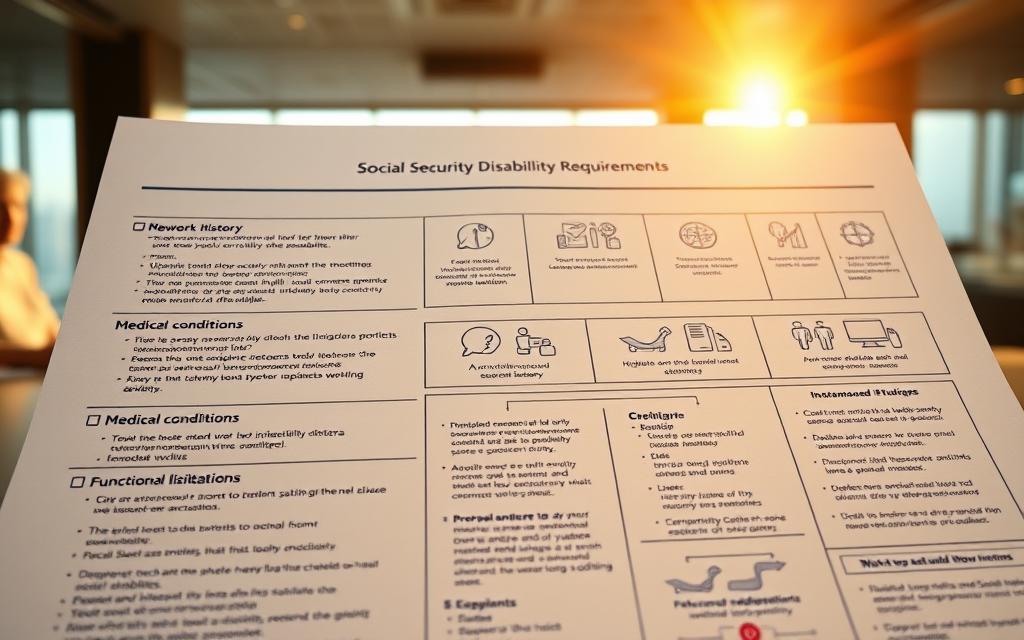
The Social Security Administration (SSA) has two main programs. These are Social Security Disability Insurance (SSDI) and Supplemental Security Income (SSI). Each has its own rules for applicants.
SSDI vs. SSI: Key Differences
SSDI and SSI are different in a few ways:
- SSDI needs a work history with enough credits
- SSI is for those with low income
- SSDI payments are based on past earnings
- SSI gives a set monthly amount
Work Credits: Your Disability Insurance
Work credits are key for SSDI. The SSA Hearing Tips say it’s important to know how credits work:
- Credits come from taxable work
- You can earn up to 4 credits a year
- Young people need fewer credits
Defining Disability
The SSA has a clear idea of what disability means. To qualify, you must:
| Criteria | Requirements |
|---|---|
| Medical Condition | Severe, lasting 12+ months or fatal |
| Work Capacity | Can’t do substantial work |
| Previous Work | Can’t go back to old job or adjust to new work |
Knowing these rules is vital for the Social Security disability application.
Common Reasons for Denial
Going through the Social Security Disability Appeal Process can be tough. It’s key to know why SSDI often says no. This helps applicants make their appeal stronger.
The Social Security Administration often says no for a few big reasons. Knowing these can help applicants do better with their appeal.
Insufficient Medical Evidence
Medical records are the base of any disability claim. If they’re not full or clear, claims get denied right away. To avoid this, applicants need to give:
- Full medical records
- Clear doctor’s statements
- Results from tests
- Records of treatments
Failure to Follow Treatment Plans
The Social Security Administration wants applicants to stick with their treatment plans. Not doing so can hurt a claim a lot.
| Treatment Compliance Factor | Impact on Claim |
|---|---|
| Skipping Medical Appointments | Negative Claim Perception |
| Refusing Recommended Treatments | Potential Claim Denial |
| Lack of Medical Cooperation | Reduced Claim Credibility |
Not Meeting Work Requirements
Work credits are very important for SSDI. Not having enough work history or credits can lead to a claim being turned down. Applicants need to show:
- Enough Social Security work credits
- Recent jobs
- Big contributions at work
Knowing why claims get denied helps applicants fix their claims. This way, they can have a better chance of winning their appeal.
The Role of Medical Documentation
When you appeal a disability denial, you need lots of medical records. The Social Security Administration (SSA) looks at these records a lot. Knowing how to show your medical records well can help you win your appeal.

When you file for reconsideration, your medical records are very important. They can help prove you need Social Security Disability benefits.
Importance of Medical Records
Medical records show you can’t work because of your disability. When you appeal, think about these things:
- Detailed records of your medical conditions
- Full treatment history
- How your disability limits you
- What doctors say about your health
Types of Evidence to Include
| Evidence Type | Importance |
|---|---|
| Diagnostic Test Results | Provides clear medical proof |
| Treatment Records | Shows you’re getting medical care |
| Physician Statements | Offers a doctor’s opinion |
| Medication Records | Shows how serious your condition is |
Obtaining Medical Statements
Communication is key when getting medical statements. Talk well with your doctors to get what you need for your appeal. Ask for detailed statements that explain your medical limits and why you can’t work.
Getting all your medical records takes time and effort. But each piece helps you get closer to winning your appeal.
Understanding the Appeals Council
Going through the Social Security Appeals Timeline can be tough. It’s for people who want SSDI benefits. The Appeals Council is a key part of the appeal process. It gives applicants a last chance to fight an ALJ decision.
The Appeals Council is a special group in the Social Security Administration. They check ALJ decisions for mistakes. They look for legal or procedural errors that might have changed the outcome.
What the Appeals Council Does
- Review decisions made by Administrative Law Judges
- Identify possible legal or procedural mistakes
- Decide if the original decision should stay the same, change, or go back for more review
Decision-Making Process
The Appeals Council looks at several things when they review a case:
- If the decision followed the law
- If the hearing had enough information
- If it followed Social Security Administration rules
Filing a Request for Review
To start an Appeals Council review, you need to write a request. You must do this within 60 days of getting the ALJ’s decision. You should explain why you disagree with the previous decision clearly.
Tip: Make sure to document all your points well. Include any evidence that supports your appeal.
Knowing how the Appeals Council works can really help. It shows you’re serious about getting the SSDI benefits you need. Keep fighting and make sure your appeal is well-supported.
Continuing Benefits During the Appeal
Going through a Second Chance Disability Claim is tough. It’s even harder when your Social Security Disability Insurance (SSDI) benefits are at risk. Knowing how to Appeal SSDI Online and keep your money coming in is key for those facing a denial.
If you get a disability claim denial, you have ways to keep getting benefits while you appeal. Getting Legal Help For SSDI Denial is very important. The appeals process is complex and fast.
Understanding Benefit Status
While you appeal, you might be able to keep getting benefits. Important things to think about include:
- Filing your appeal within 10 days of getting the denial notice
- Asking for continued payments during the reconsideration phase
- Showing you’re really disabled with new medical papers
Impact of Appeals on Payments
Your payments can change based on the appeal stage. It’s very important to keep good records of your health. If you win your appeal, you might get:
- Money back for the time you didn’t get benefits
- Monthly disability payments again
- Money for the time you were without benefits
Reinstating Benefits if Denied
If your first appeal fails, you can try again. You can have a hearing in front of an Administrative Law Judge. This could help you get your benefits back. Having a good disability lawyer can really help your chances.
The Importance of Timeliness
Getting through the Social Security Disability Insurance (SSDI) appeal process needs quick action. You must know and meet important deadlines. If you miss these, your whole appeal plan could fail.
Critical Appeal Deadlines
The SSDI appeal has strict timelines. You usually have 60 days after denial to appeal. These deadlines are strict and must be watched closely.
- Initial appeal deadline: 60 days from denial notice
- Reconsideration request: Must be submitted within strict 60-day window
- Administrative Law Judge hearing: Requires timely filing
Consequences of Missing Deadlines
Missing medical records deadlines can cause big problems. You might have to start over, losing time. This could hurt your chances of winning your SSDI appeal.
| Appeal Stage | Deadline | Action Required |
|---|---|---|
| Reconsideration | 60 days | Submit written request |
| Administrative Hearing | 60 days | Request hearing review |
| Appeals Council | 60 days | File written request |
Requesting Extensions
Extensions are rare but possible. You need a good reason for missing the deadline. Reasons include serious illness, emergencies, or communication issues.
- Provide written explanation for delay
- Submit supporting documentation
- Request extension promptly
Managing deadlines well is key to winning your SSDI appeal. Keep records up to date, submit on time, and know the process. This will help you succeed.
Preparing for Administrative Law Judge Review
Going to an Administrative Law Judge (ALJ) hearing can be tough for SSDI applicants. It’s key to know the process and get ready well. This hearing is a big chance to win your SSDI benefits back.
When you face a denial, getting ready for your ALJ hearing is very important. Winning your appeal needs good planning and all the right documents.
Key Considerations for Your Hearing
- Know what the ALJ does with your disability claim
- Learn about the hearing format
- Understand your rights during the hearing
- Get ready for questions and stay calm
Strategies for Effective Testimony
- Practice talking clearly about your health
- Tell how your health limits your work
- Be honest and keep your story the same
- Don’t make your health problems seem worse or less
Tips for Presenting Evidence
| Evidence Type | Recommended Action |
|---|---|
| Medical Records | Organize them in order, focus on the latest ones |
| Work History | Give a detailed account of your job and what you can’t do |
| Treatment Documentation | Include doctor’s notes and treatment plans |
Remember, good preparation can really help you win your ALJ hearing and get your benefits.
Final Thoughts on Winning Your Appeal
Going through the Social Security Disability Insurance (SSDI) appeal process takes time and smart planning. Many people win by knowing the details of disability claims. Having a skilled SSDI lawyer for appeal can really help.
It’s important to avoid common mistakes in appeals. Keep good records and watch the deadlines SSA sets. It might feel hard, but keep going. Knowing your rights and being ready can really help your appeal.
Most appeals go through many steps. Stay organized, keep all medical records, and stay active. Each step is a chance to show your case better. This might change previous decisions and get you the help you need.
Legal help groups and disability advocates can also guide you. Even though it’s tough, many people win their SSDI appeals with the right prep and effort.