

What if the secret to thriving in America’s $814 billion convenience store industry isn’t just luck, but a repeatable blueprint? With over 150,000 stores nationwide, standing out requires more than snacks and soda—it demands strategy. This guide cuts through the noise to reveal actionable steps for turning your vision into a profitable business.
A solid foundation starts with research. Market trends, customer habits, and local competition shape every decision. For example, Parm Bhullar built a $37 million empire by focusing on high-traffic locations and diverse product offerings. Your journey begins with a detailed business plan covering financial forecasts, inventory systems, and day-to-day operations.
Location remains king. Stores near busy intersections or residential areas see 30% higher foot traffic. Pair visibility with smart inventory—60% of sales come from core items like grab-and-go meals and household essentials. Don’t overlook permits: health licenses, food handling certifications, and occupancy approvals vary by state.
Funding your venture? Initial costs range from $50,000 to $250,000. Many owners use bank loans or credit lines, but crowdfunding is rising. Allocate funds for security systems, refrigeration, and employee training. The right mix of preparation and adaptability separates thriving businesses from those that close within a year.
Key Takeaways
- U.S. convenience stores generated $814 billion in 2023, proving strong demand
- A clear business plan reduces risk and guides financial decisions
- Prime locations boost visibility and customer traffic
- State-specific licenses and health permits are non-negotiable
- Smart inventory management drives 60% of total sales
- Initial funding often exceeds $50,000 for equipment and permits
Understanding the Convenience Store Market
The $906 billion global industry thrives on immediacy. Urbanization and tech upgrades drive 9% annual sales growth in U.S. outlets, according to NACS Magazine. Stores now serve as hybrid hubs for fuel, snacks, and essential services.
Industry Trends and Sales Growth
Modern shoppers demand speed and variety. Over 75% of buyers under 35 prioritize one-stop shopping, fueling expansion of ready-to-eat meals and specialty items. Energy drinks and keto-friendly snacks now account for 22% of non-fuel revenue.
| Product Category | Growth (2023) | Profit Margin |
|---|---|---|
| Prepared Foods | 14% | 35-45% |
| Beverages | 9% | 25-30% |
| Health-Conscious Items | 18% | 40%+ |
| Tobacco Alternatives | 6% | 20-25% |
Insights on U.S. Market and Customer Demographics
Urban centers see 64% conversion rates at fuel stations, while suburban stores attract families with grocery staples. Ottawa retailers report 37% higher sales when stocking local craft beers and gluten-free options.
Three demographic drivers shape inventory decisions:
- Gen Z: Seek Instagram-worthy snacks and eco-friendly packaging
- Millennials: Prioritize coffee quality and mobile payment options
- Baby Boomers: Value prescription pickup services and senior discounts
These insights inform later discussions about site selection and product mix strategies.
Developing Your Business Plan
A strategic roadmap separates thriving retailers from struggling startups. Banks approve 72% of loan applications with detailed plans, according to Federal Reserve data. This document proves viability to lenders while guiding daily decisions.
Key Elements of a Successful Business Plan
Effective plans contain six non-negotiable components:
- Market analysis: Identify neighborhood spending habits and competitor weaknesses
- Competitive landscape: Map rival stores within 2-mile radius
- Financial projections: Include 3-year cash flow estimates and break-even analysis
- Inventory strategy: Plan shelf space allocation for top-selling categories
- Staffing model: Outline shift schedules and training protocols
- Risk assessment: Address theft prevention and supply chain backups
Financial Forecasting and Funding Requirements
Startup budgets require precision. Typical expenses include $30,000 for refrigeration units and $15,000 for initial stock. Operators who track weekly sales data see 23% faster profit growth.
Build three financial scenarios: conservative, moderate, and aggressive. Most lenders want 10-15% owner equity. Pair realistic projections with contingency funds for unexpected costs like equipment repairs.
Successful applicants demonstrate repayment capacity through local demographics and traffic patterns. This groundwork supports discussions about loans and investor partnerships in later sections.
Securing Startup Capital and Financing Options
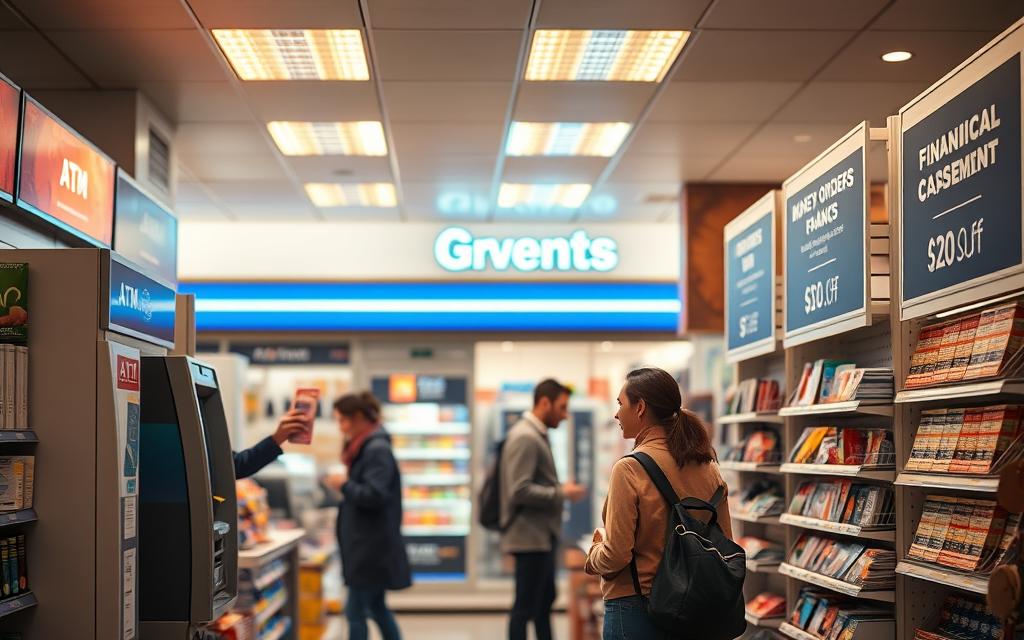
Launching a retail operation requires smart money management from day one. Initial investments range from $50,000 to $1 million, with location size and inventory choices driving variations. Lenders approve 68% more applications when paired with detailed financial projections and neighborhood demand analysis.
Bank Partnerships vs. Alternative Funding
Traditional loans offer stability, but approval rates hover at 52% for new businesses. Many owners now combine SBA loans with investor partnerships – 22% use online lenders for faster access to capital. The Amber Grant Foundation awards $10,000 monthly to female entrepreneurs, demonstrating niche opportunities.
Breaking Down Operational Expenses
Monthly overhead often surprises first-time owners. Beyond $15,000 refrigeration units and $8,000 POS systems, budget for:
- Employee wages ($3,000+/month for 2 staff)
- Inventory restocking ($5,000 initial order)
- Security upgrades ($2,500 for cameras/alarms)
Texas retailer Maria Cortez slashed costs 18% by negotiating lease terms and buying used shelving. Track every dollar: operators who monitor weekly expenses recover initial investments 5 months faster on average.
Prepare for funding talks with three documents – profit/loss forecasts, competitor analysis, and a repayment timeline. This toolkit builds confidence with financial backers while clarifying your path to breakeven.
Choosing the Optimal Location for Your Store
Location choice remains the cornerstone of retail success, with top-performing outlets seeing 40% higher footfall through strategic placement. Chains like Love’s Travel Stops attribute 70% of their revenue growth to data-driven site selection. Three factors separate winning locations from risky bets: measurable traffic patterns, competitor gaps, and frictionless access.
Measuring Foot Traffic and Analyzing Competitors
Manual counts still matter. Stand outside potential sites during morning rushes and evening peaks – 150+ pedestrians per hour signals strong potential. Pair this with GIS tools mapping daytime populations and vehicle routes. When Wawa expanded into North Carolina, they targeted areas with 25% fewer competitors within a 1-mile radius.
Assess nearby businesses holistically. A site near gyms and offices sells more protein bars and coffee. Use heat maps to identify “retail deserts” lacking essentials like milk or bread. Successful operators track:
- Parking availability (minimum 5-8 spaces)
- Visibility from main roads
- Complementary businesses within walking distance
Evaluating Site Accessibility and Parking Facilities
Buc-ee’s Brunswick location exemplifies ideal accessibility – positioned near I-95 exits with 120+ parking spots. Customers won’t fight for space or navigate complex turns. Verify zoning allows 24/7 operations if targeting night-shift workers or travelers.
Negotiate leases with growth in mind. Texas-based Yesway secured 10-year terms with renewal options at 85% of their sites. Always factor in future road expansions or construction projects that could alter traffic flows. A prime spot today might become a dead zone tomorrow.
Remember: Your location dictates customer convenience. Get it right, and you’ll build loyalty that withstands economic shifts. Get it wrong, and even flawless execution can’t compensate.
Navigating Licenses, Permits, and Legal Requirements
Legal compliance forms the backbone of any retail business. Missing one document can delay openings or trigger fines up to $10,000. Start applications early – some states take 90+ days to process alcohol permits.

Essential Documentation Checklist
| Permit Type | Common States | Processing Time |
|---|---|---|
| Business License | All 50 states | 2-4 weeks |
| Tobacco Sales | CA, TX, NY | 6-8 weeks |
| Food Handling | FL, IL, OH | 3-5 weeks |
| Lottery Terminal | 35 states | 30-45 days |
Gasoline sellers need underground storage tank permits in 28 states. Arizona requires separate approvals for ice machines, while Maine mandates bait-selling licenses near fishing areas.
Applications often demand floor plans, safety inspections, and background checks. Denver retailers report 22% longer wait times during peak seasons. Partner with local chambers of commerce for updated requirement lists.
Noncompliance risks escalate quickly. A Texas operator faced $15,000 fines for expired health permits last year. Use digital calendars with renewal alerts, and always display licenses publicly.
Visit SBA.gov for state-specific checklists. Consider compliance software like Avalara to track multiple locations. Proper documentation protects your investment and builds community trust.
Designing an Efficient Store Layout and Product Mix
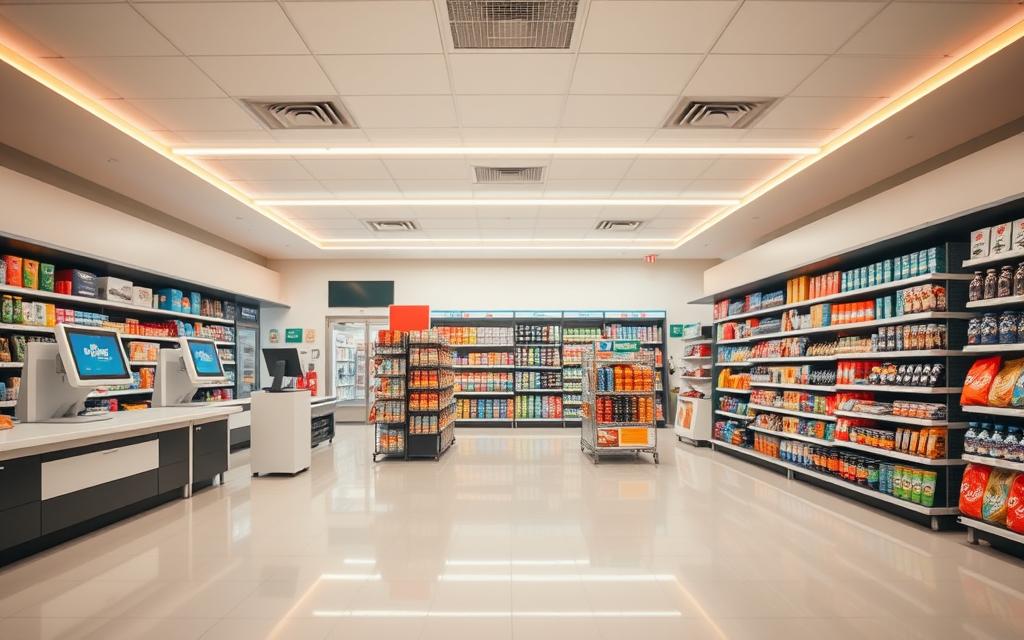
Smart space utilization separates profitable retailers from crowded discounters. Stores using grid layouts see 28% faster customer movement, while loop designs boost impulse purchases by 19%. Start with a decompression zone – the first 15 feet where shoppers adjust to lighting and displays.
Maximizing Limited Space Effectively
Place essentials like milk at the back to guide traffic past snacks and beverages. Wing shelves at aisle ends increase visibility for seasonal items or local favorites. 7-Eleven increased sales 12% by positioning energy drinks near checkout counters.
Three layout strategies dominate successful operations:
- Grid patterns: Maximize shelf space for 1,500+ SKUs
- Forced-path designs: Direct customers past high-margin goods
- Spine configurations: Central aisle with category branches
Selecting High-Demand and Profitable Products
Top-performing outlets allocate 40% of shelf space to tobacco alternatives and grab-and-go meals. Analyze local demographics – urban stores near offices sell 3x more premium coffee than suburban locations.
Balance variety with turnover rates. Limit slow-moving items to single facings, while dedicating prime eye-level space to:
- Nicotine pouches (55% gross margin)
- Single-serve snacks (35-45% margin)
- Local craft beverages (22% price premium)
Rotate 15% of stock monthly based on seasonal trends. Minnesota retailers gained 18% winter sales by expanding hot food options. Use digital menu boards to highlight time-sensitive offers without physical rearrangements.
Implementing Technology and Point-of-Sale Systems
Modern retailers gain a 23% operational edge through strategic tech adoption. Cloud-based tools transform inventory management and customer interactions while cutting risks. 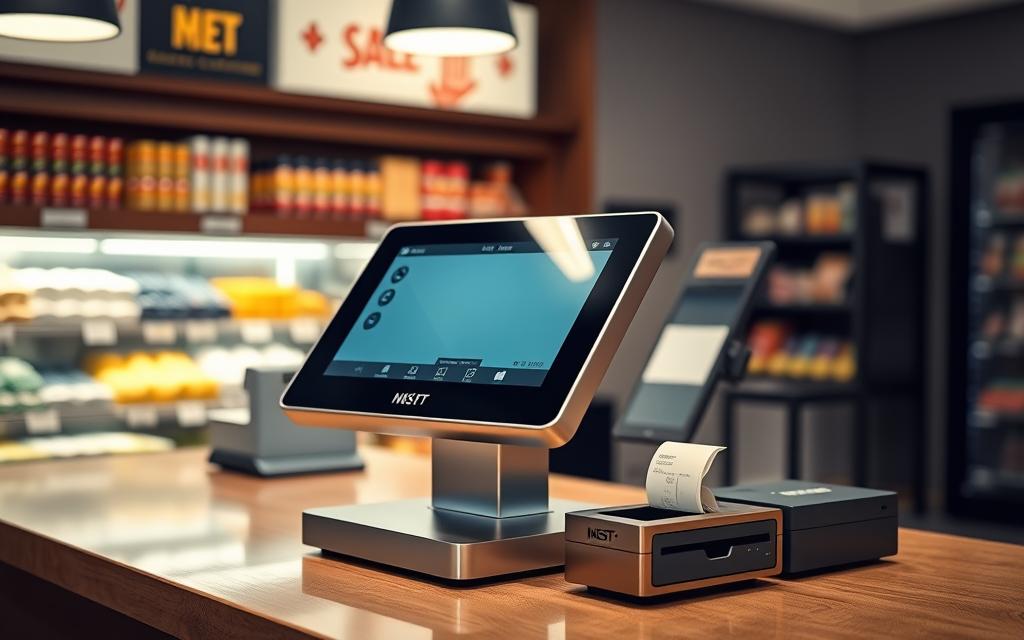
Smart Transaction Management
Advanced POS platforms automate critical tasks. Real-time stock alerts prevent shortages, while integrated accounting syncs with QuickBooks. Stores using these POS implementation strategies report 17% faster checkout times and 31% fewer pricing errors.
Protecting Assets Digitally
Surveillance networks deter theft and resolve disputes. Cameras covering registers reduce internal shrinkage by 43%, per National Retail Federation data. Pair motion sensors with cash drawer monitoring for 24/7 oversight.
Three tech essentials drive success:
- Remote access: Adjust prices or review sales from any device
- Role-based logins: Limit employee access to sensitive functions
- Automatic backups: Safeguard data against system failures
Choose scalable solutions that grow with your business. Providers like Lightspeed offer bulk inventory uploads and multi-store dashboards. Proper tech integration turns operational hurdles into competitive advantages.
Optimizing Inventory and Financial Management
Profit margins in retail hinge on balancing stock accuracy with cost discipline. Advanced tracking systems
Strategies for Effective Inventory Control
Real-time monitoring tools flag low stock levels before customers notice gaps. Weekly audits catch discrepancies between digital records and shelf quantities. Consider these proven approaches:
| Technique | Impact | Implementation |
|---|---|---|
| RFID Scanners | 42% faster counts | Mobile devices for staff |
| JIT Ordering | 18% waste reduction | Automated supplier alerts |
| Category Analysis | 27% sales boost | Monthly SKU reviews |
Diversify suppliers to avoid single-source bottlenecks. Negotiate bulk discounts for top-selling snacks and beverages. Stores using multiple vendors report 15% lower procurement costs.
Improving Profit Margins through Cost Management
Automated reordering prevents overstocking perishables like sandwiches or dairy. Cloud-based dashboards highlight underperforming products needing price adjustments. Successful operators:
- Renegotiate contracts during seasonal demand shifts
- Use cross-docking to slash storage fees by 22%
- Train teams to spot theft patterns during peak hours
Monthly financial reviews compare actual profit margins against forecasts. Adjust orders based on local event calendars – stadium crowds demand extra ice and beer. Pair data insights with staff feedback for balanced decision-making.
Effective Marketing Strategies for Your Convenience Store
Local connections fuel retail success in competitive markets. Stores that align promotions with neighborhood needs see 38% higher repeat visits than generic campaigns. Tailored approaches build trust while driving consistent foot traffic.
Leveraging Local Traffic and Community Engagement
Strategic signage near intersections captures commuters’ attention – 63% of impulse buyers cite visible displays as purchase triggers. Partner with schools for fundraiser nights or sponsor little league teams to become a community hub. Renaissance Marketing boosted a Virginia retailer’s sales by 19% through hyper-local Facebook ads targeting nearby apartment complexes.
Three proven tactics for neighborhood visibility:
- Host “buy local” events with food trucks and live music
- Offer festival-themed bundles during city celebrations
- Display rotating chalkboard specials facing pedestrian pathways
Building Customer Loyalty and Reward Programs
Digital punch cards drive 27% more weekly visits than paper systems. Surprise regulars with free coffee upgrades or birthday discounts using POS data. A Texas chain increased average basket size by $6.40 after launching tiered rewards for fuel purchases.
Personalization separates thriving businesses from competitors. Track buying patterns to send targeted coupons – parents appreciate 2pm snack deals when schools dismiss. Proven marketing tactics combine tech tools with genuine relationship-building for lasting impact.
Operating and Staffing Your Store for Success
Your team drives daily performance more than any product or promotion. Retailers with engaged staff see 31% higher customer satisfaction scores and 19% faster checkout times. The right hires become brand ambassadors who turn casual shoppers into loyal regulars.
Recruiting and Training the Right Employees
Look for candidates who thrive in fast-paced environments. Georgia-based RaceTrac attributes its 12% lower turnover rate to behavioral interviews assessing multitasking skills. Offer competitive wages – stores paying 10% above local averages report 40% fewer staffing gaps.
Effective onboarding includes:
- POS system mastery within 3 shifts
- Upselling techniques for seasonal items
- Emergency protocol simulations
Weekly refresher sessions keep skills sharp. A Florida chain reduced transaction errors by 28% after implementing monthly role-playing exercises.
Streamlining Daily Operations and Workflow
Standardized checklists prevent missed tasks during rush hours. Use color-coded shift schedules to balance experience levels across teams. Stores with clear role definitions see 23% fewer operational hiccups.
| Process Improvement | Time Saved | Impact |
|---|---|---|
| Pre-shift huddles | 15 min/day | 18% faster restocking |
| Digital task boards | 2 hours/week | 34% fewer missed orders |
| Cross-training staff | N/A | 27% better shift coverage |
Track performance metrics like items scanned per minute. Reward top performers with flexible scheduling – a proven retention booster. Ohio retailers using this approach maintained full staffing during peak holiday seasons.
Understanding Trends and Adapting to Consumer Behavior
The heartbeat of modern retail success lies in decoding shifting customer desires. Over 68% of shoppers now expect retailers to anticipate their needs before they walk in, according to NielsenIQ’s 2024 Consumer Report. Stores that adapt quickly see 22% higher repeat visits compared to static competitors.
Staying Ahead with Market and Product Trends
Consumer priorities now blend convenience with conscience. A 2023 NACS study found 59% of buyers under 40 will pay more for eco-friendly packaging. Urban outlets report 33% sales jumps after adding plant-based snacks and reusable utensil stations.
Three forces drive today’s purchasing decisions:
- Speed: 72% want checkout times under 90 seconds
- Personalization: Digital coupons tailored to past purchases boost redemption by 41%
- Transparency: 54% check ingredient labels before buying new products
| Emerging Trend | Consumer Impact | Retailer Action |
|---|---|---|
| Contactless Payments | 63% prefer tap-to-pay options | Install NFC-enabled POS systems |
| Local Sourcing | 48% seek hometown brands | Dedicate 15% shelf space to regional items |
| Smart Carts | 29% faster shopping trips | Test AI-powered basket scanners |
Weekly sales data reviews help spot rising categories. A Midwest chain gained 17% revenue by swapping sugary drinks with kombucha when local gym memberships spiked. Rotate 10-20% of stock quarterly to stay relevant.
Listen beyond transactions. Social media polls revealed customers wanted later hours—extending operations till midnight increased after-work snack sales by $1,200 weekly. Adaptability turns casual buyers into loyal advocates.
How to Open a Convenience Store: Step-by-Step Essentials
Turning a retail vision into reality demands structured execution across six critical phases. Successful operators complete these milestones within 4-9 months, depending on location complexity and permit timelines.
Phase-Driven Launch Strategy
Begin with foundational work. Finalize your business plan and secure funding within the first 45 days. Veteran retailer Jessica Kim emphasizes: “Approach three lenders minimum – competition improves loan terms.”
Critical path items include:
- Location lock: Secure lease agreements before permit applications
- Vendor contracts: Negotiate 30-day credit terms with suppliers
- Staff training: Conduct mock shifts before soft opening
| Phase | Duration | Key Deliverables |
|---|---|---|
| Pre-Launch | Weeks 1-6 | Business registration, insurance policies |
| Build-Out | Weeks 7-12 | Store design approval, equipment installation |
| Compliance | Weeks 13-16 | Health permits, fire safety certification |
| Stocking | Weeks 17-20 | Initial inventory receipt, pricing labels |
Track progress using project management tools like Trello or Asana. Update financial projections weekly – unexpected costs often surface during renovations. Allocate 15% of your budget for contingency expenses.
Final preparations require precision. Test POS systems with sample transactions and conduct security walkthroughs. Schedule your grand opening 2-3 weeks after staff training completes for optimal readiness.
Conclusion
Launching a thriving retail operation demands equal parts preparation and adaptability. Strategic location choices, community-focused inventory, and streamlined systems form the foundation of sustainable success. Stores prioritizing local preferences for grab-and-go meals and niche products often outperform competitors by 22% in repeat visits.
Financial discipline separates enduring businesses from short-lived ventures. Operators allocating 15% of budgets for unexpected costs navigate challenges like equipment repairs or permit delays more effectively. Pair data-driven decisions with staff training – engaged teams boost customer satisfaction scores by 31%.
Remember these essentials:
- Market alignment: Rotate 15% of stock quarterly based on neighborhood trends
- Tech integration: Cloud-based POS systems reduce checkout errors by 17%
- Community roots: Local partnerships increase foot traffic 19%
With meticulous planning and responsiveness to consumer shifts, your venture can join the 63% of stores exceeding $240k first-year revenue. Start today – your blueprint for retail success awaits.